
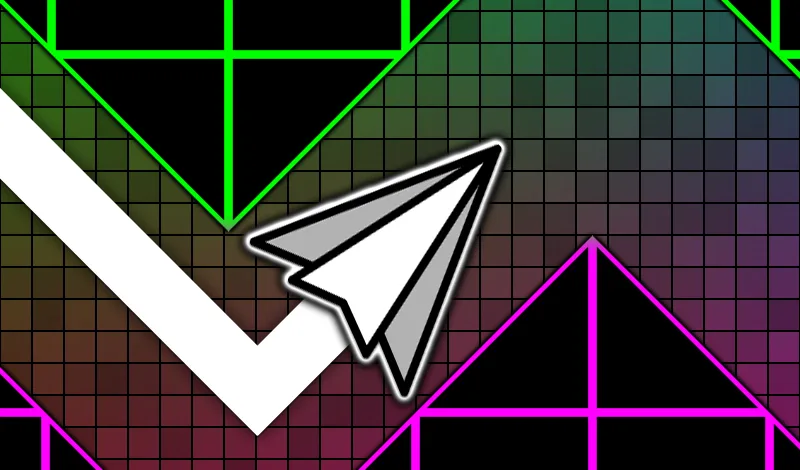
Geometry Wave: Neon Challenge
Geometry Wave: Neon Challenge
Geometry Wave: Neon Challenge is a reflex course built around a wave that moves forward automatically. You control only its vertical path: hold an input to rise and release it to descend. The result is a zigzag line through neon corridors, where a small change in press length can decide whether the wave clears a narrow gap or hits an obstacle.
There is no steering left or right. The useful skill is reading the course early enough to make a controlled rise or fall before the opening arrives. A collision sends you back to retry, so each attempt can teach you the timing of a specific section.
Hold to Rise, Release to Fall
On PC, use W, Space, or Up Arrow while you want the wave to climb. Let go to send it downward. On a phone or tablet, press and hold the screen to rise, then release to descend. Short presses create a smaller adjustment; a longer hold changes the path more sharply.
The wave continues moving forward while you control its height. Avoid treating the input like a repeated jump button. Instead, use the press-and-release rhythm to draw a steady diagonal, then reverse direction when the next corridor requires it.
Read the Next Opening
Look beyond the wave's current position and identify the next gap between walls. If you wait until the obstacle is beside the wave, there may not be enough distance to change its angle. Begin adjusting while the opening is still ahead, then aim for its center rather than scraping along one edge.
A corridor can require a sequence of rises and falls. Think in segments: enter the gap at a safe height, pass through its narrowest point, and only then start the next adjustment. This makes the course easier to understand than reacting to every flash of neon independently.
Turn Retries Into Timing Practice
A failed run is useful when you remember where the collision happened. On the next attempt, change the timing before that point rather than altering the whole route. If the wave hit the upper wall, release earlier or hold for less time; if it dipped too low, begin the rise sooner.
The retry loop is immediate, so you can repeat one difficult section while its pattern is fresh. Keep movements deliberate. Pressing and releasing too rapidly can create an unstable zigzag that is harder to place through a narrow opening.
Geometry Wave FAQ
How does the wave move? It travels forward automatically. Holding the control makes it rise; releasing makes it descend.
What are the PC controls? W, Space, or Up Arrow while held. The exact key prompt can vary by version, so check the game screen when it loads.
Can I play on mobile? Yes. Press and hold the screen to rise, then lift your finger to descend.
How do I get through tight gaps? Read the opening early and aim for its center with a measured press-and-release rhythm.