
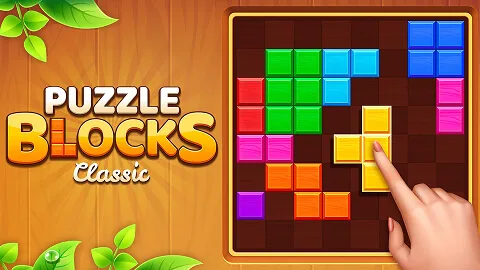
Puzzle Blocks Classic
🧱 What Is Puzzle Blocks Classic?
Puzzle Blocks Classic is a free 10x10 placement puzzle where fixed geometric pieces are arranged to complete rows and columns. Three candidates appear at a time, and a new set arrives after all three are placed. There is no falling timer, so every move can be considered carefully. The broad board gives beginners room to experiment while giving high-score players enough space to develop several line plans at once.
Shapes can include single cells, short bars, long bars, squares, L forms, and other arrangements. They cannot rotate after appearing. A careless opening may leave many empty cells but divide them into pockets no large shape can use. The game runs through g.hebi.gg and is playable directly from Hebigame without an app download.
🎮 Controls and Line-Clear Rules
Drag a candidate with the mouse or a finger and release it over empty board cells. Once placed, a piece cannot move. Completing all ten cells of a row or column clears that line and awards points. Clearing multiple lines together can recover a large area and support a higher score.
The run ends when a current piece has no legal position. Total empty-cell count is therefore not enough to judge safety. Inspect the shape of the space, the board contour, and whether each of the three candidates can still be used.
📏 Using the 10x10 Board
The wider board allows separate working zones. You can build a horizontal line on one side while preserving a square landing area on the other. Avoid creating a tall wall through the center, because that divides the grid and removes locations for long or wide shapes. Keep the main open region connected.
A ten-cell line also takes longer to complete than a line on a smaller grid. Do not create too many rows that each require a different rare shape. Finish reliable lines periodically, while reserving only useful intersections for future double clears.
🏆 High-Score Placement Strategy
Evaluate the least flexible piece first. If a 3x3 square or long bar has one valid home, preserve it. Use one- and two-cell shapes to repair contours and close lines rather than scattering them randomly across the center.
Look at the edge created after placement. Flat boundaries accept more future shapes, while deep one-cell notches demand exact pieces. A move that scores immediately but creates several notches may be weaker than a quiet placement that keeps the entire board smooth.
When the board becomes more than half full, measure how many additional three-piece sets you can process before failing. Recovering space after congestion is a stronger sign of skill than one early combo. Trace a loss back to the placement that first divided the broad central area.
🌐 Who Should Play?
Puzzle Blocks Classic is for players who enjoy relaxed wood-block games, Tetris-like geometry without falling pressure, and spatial brain training. The 10x10 format supports both simple line clears and longer plans involving multiple working areas.
Begin with reliable single rows, keep large-piece space connected, and then build row-column intersections when the board is stable. Patience and a smooth board contour matter more than filling every available cell.
🔍 Make the Extra Board Space Work
A 10x10 grid is not permission to place pieces everywhere. Assign one region to active line building and protect another as flexible reserve space. This prevents the early freedom from becoming late-game clutter.
Compare runs by how many trays survive after the board becomes crowded. If you can clear lines and restore a broad rectangle from a difficult position, the underlying layout is improving even before the final score catches up.